A Wine Day or a Villages Day from Avignon: Which One to Book
The short answer. Book the wine day if you want to understand one wine well and everyone in your party is an adult. Book the villages day if it is your first visit, you have children with you, or you want the postcard views. Short of time? From the tourist office, a morning villages half day and an afternoon wine half day fit into one date. See the Provence wine tours from Avignon and the villages days side by side.
Wine day and villages day, side by side
| Wine day | Villages day | |
|---|---|---|
| Where | North, to the Rhône crus | East and south, the Luberon to the aqueduct |
| Half day | $91 to $126 | $92 to $114 |
| Full day | $203, 7 hours | $136 to $196, 8.5 to 10 hours |
| Time at the stops | About 6.5 of 7 hours | About 5 to 5.5 hours |
| Children | None on some days, 18+ on others | Usually welcome |
| What the fare carries | Tastings on some; vehicle only on others | Transport and guide; entries rarely |
| Cancellation | Free up to 24 hours | Free up to 24 hours |
The case for the wine day
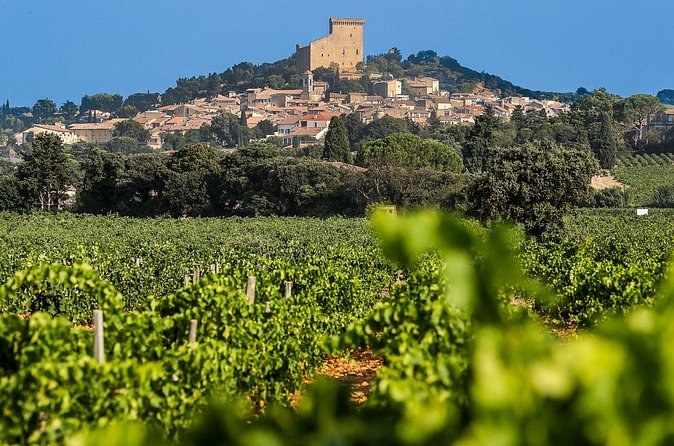
The Rhône crus sit close to Avignon. The Châteauneuf-du-Pape vineyards begin about 20 km north, so a wine day spends little time on the road: the full Châteauneuf-du-Pape day gives about six and a half of its seven hours to one appellation, from a vineyard stop to a château, a family estate, a third winery and a village cellar. The half days range wider, adding Gigondas, Vacqueyras and the sweet-wine villages under the Dentelles de Montmirail.
It suits a couple or a group of adults who like wine, want to buy a few bottles, and would rather understand one place than glimpse six. It is also the better choice in the heat, because much of the day is spent in cool cellars.
Read the fare closely. On some wine days the tastings are on the list of inclusions; on others the list names only the vehicle and the itinerary describes the tastings, so ask when you book. Wine tasting from Avignon explains what each village pours.
The case for the villages day
The villages day is the Provence most people picture: Gordes stacked on its hill, the ochre trail at Roussillon, the spring at Fontaine-de-Vaucluse, Les Baux on its rock and the Roman aqueduct. The highlights day makes seven stops in nine and a half hours and suits a first visit with no car.
The trade is time. You spend five hours or more on foot, but in seven places, so each gets between half an hour and ninety minutes. In the lavender weeks, from late June to mid-July, some of these days add a photo stop at Sénanque Abbey, without entry. Children are usually welcome, with pushchairs and infant seats on several days. If one sight matters most, choose a day that lingers: the Pont du Gard entry is on the list of inclusions only on some days, and the attractions page gives each sight its own time.
Doing both: one date, or two
If you have two days, give each its own: villages first, while you are fresh for the walking, and wine the next day. If you have one, there is a neat answer. The Luberon half day leaves the tourist office at 9 am and takes five hours; the Rhône cru half day leaves the same door at 2:30 pm. Together they cost $92 and $104 a person, close to the full wine day's $203.
Compare the Luberon half day and the Rhône cru half day before you commit, and check the map of the start points: both use the tourist office, 41 cours Jean Jaurès.
What each day feels like on the ground
A wine day is quiet and seated. You stand in a vineyard for half an hour while the guide explains the soil, the rounded stones and the wind, then move from one tasting room to the next, glass in hand, with time to ask why one bottle tastes of the stones and another of the clay. Lunch is long. The walking is short, and the minivan is never far away. By the last cellar most people have tasted more than they expected, which is why the driver matters and why a wine day is the one day nobody should plan to drive themselves.
A villages day is on your feet. Each stop is free time: you get out, walk up the lanes of a hilltop village, take the photographs, and meet the minivan again at a set hour. The path to the spring is stony, Les Baux is steep, and the ochre trail at Roussillon stains pale clothes, so dress for it. Between stops the guide talks as the minivan climbs, and those drives are where most of the history is told.
What each day costs in full
The fare is not the whole bill. On a wine day, budget for lunch at a village restaurant and for any bottles you buy; on the days whose list names only the vehicle, ask whether a tasting fee applies. On a villages day, lunch is almost never in the fare, and the entries you may want, such as the aqueduct's museum or an abbey visit, are extra. In both cases the guide's tip is up to you. Add those in before you compare the headline prices: a half day of each, from the same kerb, often ends up close to a single full day in the vines.
Which to choose, by who you are
- First visit, one day, no car: the villages day.
- Couple who love wine: the full wine day.
- Family with young children: the villages day; several wine days take no children.
- Half a day free: a half day of either, from the tourist office.
- Hot July afternoon: an afternoon among the cellars rather than on the village lanes.
- Lavender season: a villages day, or the day built round the fields.
Dates matter too. The best time to visit sets out when the lavender flowers and when the villages are busiest, and the weather by month shows how hot a July day gets.
What to book
For wine, compare the Avignon wine tours; for the villages, the day tours from Avignon. Both have days that start by the tourist office and cancel free up to 24 hours ahead. Before you settle, read the family guide if children are coming, and the facts for the story behind the 1936 wine law.
Wine country and the villages, compared
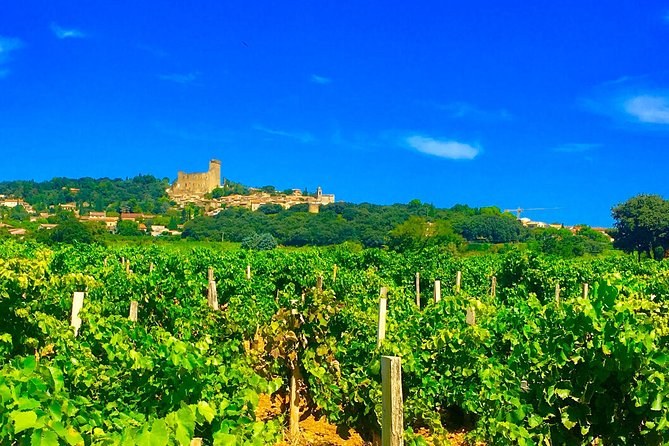
Provence Cru Wine Small-Group Half-Day Tour from Avignon
Five hours from the tourist office at 2:30 pm to three small wineries north of the city, ending with two hours in Châteauneuf-du-Pape. Tastings on the list.
From $104 per person
Check Availability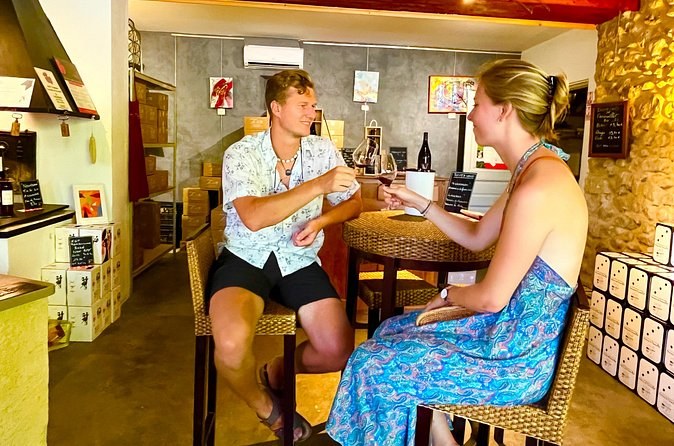
Wines from Châteauneuf-du-Pape and surrounding areas in 1/2 day
Four to six hours from Hôtel Le Bristol to three estates across the Rhône crus, tastings included; the morning three-area option adds a farm picnic. Adults only.
From $91 per person
Check Availability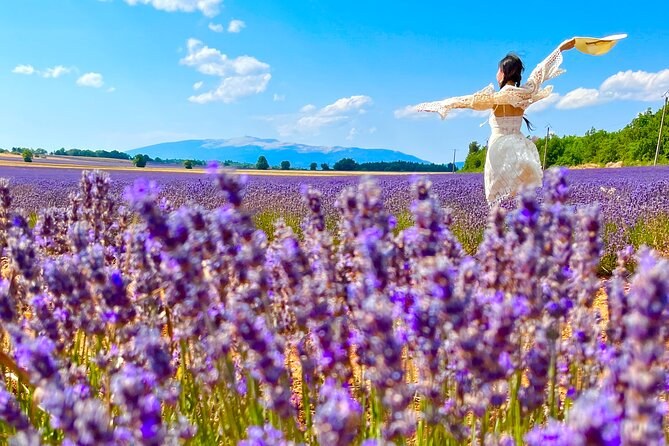
A day in the Lavenders and Villages of Provence
Eight to nine hours from Hôtel Le Bristol to the lavender fields, Roussillon and Gordes, with a picnic of farm produce in the fare. Abbey entry extra; adults only.
From $138 per person
Check AvailabilityNext: Settle who is coming and how many days you have, then book the day out that fits both. Every fare sits side by side on Avignon Tours.