Avignon Facts: Popes, a Broken Bridge and a World Heritage Year
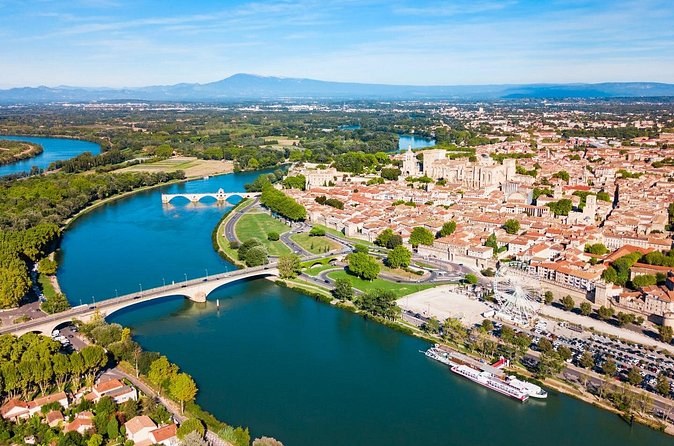
The short answer. For most of the 14th century Avignon was the capital of Christendom: nine popes lived here, one of them bought the town outright, and their palace went up in under twenty years. Its bridge stops in the middle of the river, its most famous theatre is a courtyard, and a wine law of 1936 began in its hinterland. Here are the facts, each from the official source that holds it. For a walk that tells them on the spot, see the Avignon tour options.
The popes: how a French town ran the Church
1. The first pope arrived in 1309 and lodged with the friars
A quarrel between Philip IV of France and Pope Boniface VIII led in 1305 to the election of a French archbishop, who took the name Clément V. Avignon was a vassal town of the Holy See, next to land the Church already owned, and Clément V came in 1309. The palace's history pages add that Clément V stayed only on and off and lodged at the Dominican convent. There was no papal palace yet: the one you visit came a generation later.
2. There were nine popes, not seven
If you count the popes on the palace's own list you reach nine: seven, then two of the Great Western Schism of 1378 to 1417, when for 39 years one pope reigned in Rome and another in Avignon.
3. A pope bought the town
In 1348 Clément VI bought Avignon from Queen Jeanne of Naples, countess of Provence, so the papacy owned the ground its palace stood on. Until the Revolution it stayed papal land, so when you cross the old town you are walking on what was the Church's own ground.
4. The last Avignon pope escaped through a siege
Benoît XIII was deposed twice, refused to give up the tiara, survived two sieges shut inside the palace, and got away in March 1403. Years of wandering later, the king of Aragon took Benoît XIII in.
The palace: built fast, used for everything
5. It went up in under twenty years
The palace dates the building to 1335-1352, and calls the result the largest Gothic palace. You walk through two palaces joined into one. The second phase, Clément VI's new palace, employed about 600 men on average, through the Hundred Years' War and the Black Death.
6. A pope's study is painted with hunting scenes
Clément VI's workroom, the Chambre du Cerf, has no religious scene at all: it shows hunting with ferrets and decoys, fishing in a pond and a stag hunt. Jean XXII had kept a menagerie of bears, lions and camels, and later popes added ostriches and peacocks, which turn up in the paint.
7. It spent a century as a barracks
After the popes left, legates and vice-legates governed from the palace until the Revolution. Then the army moved in, and it opened to visitors only in the early 20th century.
8. Its most famous stage is a courtyard
The Festival d'Avignon was born in the Cour d'honneur in 1947, with Jean Vilar's staging of Richard II. Every July since, the courtyard has seated 2,000 people a night. If you come in July, book the festival before the room.
The bridge, the walls and the streets
9. The bridge stops halfway across
UNESCO lists "the remains of a 12th-century bridge over the Rhône", and that is what you walk: a bridge that ends in mid-river, with the water on three sides of you. The Pont Saint-Bénézet is the only monument of the Middle Ages in France that the office calls fully accessible on your own, with a lift and a free audioguide.
10. A street still turns its water wheels
Rue des Teinturiers, the dyers' street, had 23 water wheels in 1817. Four still turn, and the street was listed in 1932. You can see them from the street for free.
11. A 4.5-tonne statue stands on the cathedral
The gilded lead Virgin on the belfry of Notre-Dame des Doms weighs 4.5 tonnes and was placed in 1859, and you can pick it out from the palace square beside it.
12. The market wears a living wall
Les Halles, the covered market on place Pie, has 40 traders inside and a planted wall by Patrick Blanc on its front.
The wine and the land around it
13. France's first wine laws started here
Châteauneuf-du-Pape became a protected appellation by decree on 15 May 1936, across five communes, with 18 grape varieties allowed when colour variants are counted. The name means "the pope's new castle"; if you book the afternoon wine day, it stops at the château ruins.
14. The festival has an official wine
Vacqueyras, a cru since 1990, has been the official wine of the Festival d'Avignon since 1998. Its neighbour Gigondas was the first Côtes du Rhône Villages wine to become a cru, in 1971.
15. The aqueduct is nearly 49 metres tall
The Pont du Gard, 25 km west, rises to nearly 48.77 m in three tiers. It carried a 50 km aqueduct to Nîmes in the 1st century and has been on the World Heritage list since 1985. Walking onto the site costs you nothing; you pay for parking and the museum.
16. The wind has a name and a calendar
Météo-France counts 108.5 days a year at Avignon with gusts of 58 km/h or more, most of them between November and April. That is the Mistral, and the wine appellations name it as part of their soil and climate. If you feel it, bring a layer, even in sunshine.
The facts at a glance
| Year | What happened |
|---|---|
| 1309 | The first pope arrives |
| 1335-1352 | The palace is built |
| 1348 | Clément VI buys the town |
| 1355-1370 | The ramparts go up |
| 1403 | The last Avignon pope escapes |
| 1936 | The wine appellation is decreed |
| 1947 | The first festival in the courtyard |
| 1995 | The historic centre joins the World Heritage list |
Where to see them for yourself
- The painted rooms and the courtyard: inside the palace, on the standard ticket.
- The broken bridge: on its own ticket or the combined one, about 35 minutes.
- The ramparts and the dyers' street: free, on foot, any time.
- The appellation: about 20 km north, on a wine day or by bike.
- The aqueduct: on a day out west of the city.
Every monument above is on the attractions page with its price and hours, and the palace page has the popes' timeline. For the wine, wine tasting from Avignon explains what each village pours, and the festivals page dates the year's events. For the wind, the weather by month has the gust days.
To hear the story in the rooms themselves, read the palace room by room; to plan a first trip, start with how to plan a first visit. A wine day such as the full Châteauneuf-du-Pape day tells the 1936 story in the vines.
Tours that tell the story
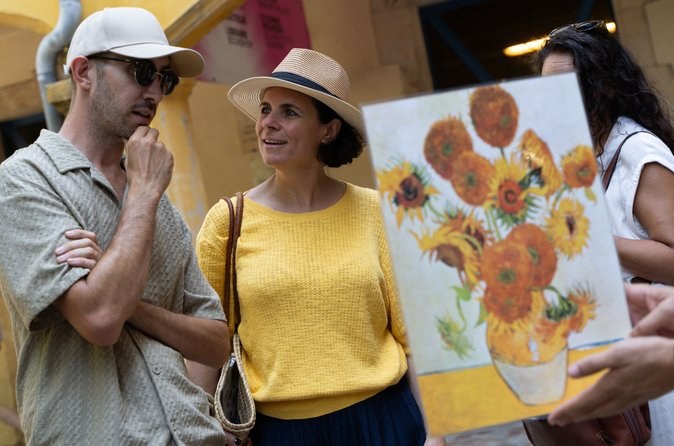
In the footsteps of Van Gogh in Provence from Avignon
Five hours from the tourist office to the painter's Arles and the asylum at Saint-Rémy, with its entry in the fare. Children from four.
From $114 per person
Check Availability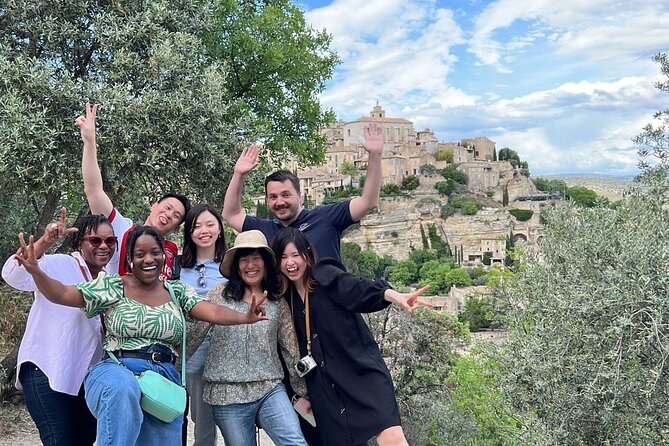
Provence in One Day Small Group Day Trip from Avignon
Ten hours from the tourist office to six stops, Roussillon to the Roman aqueduct, with the aqueduct's entrance ticket in the fare; its museum is extra.
From $196 per person
Check Availability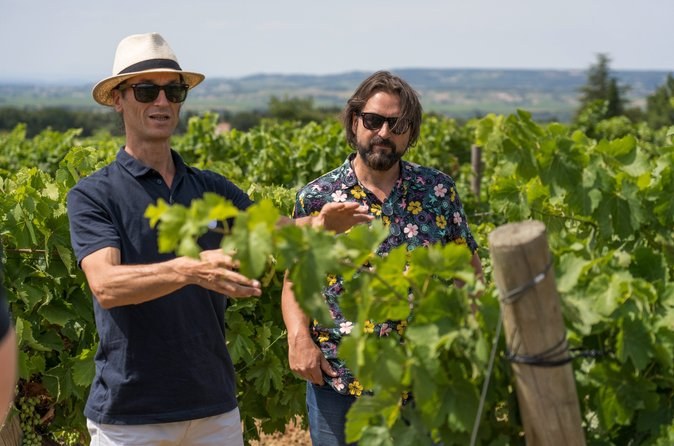
Afternoon Wine Tour to Chateauneuf du Pape from Avignon
Four hours from the tourist office at 2 pm to two estates in Châteauneuf-du-Pape, with tutored tastings in the fare and a stop at the château ruins.
From $126 per person
Check AvailabilityNext: Pick the fact that made you curious, then book the walk or the day that stands in front of it. Every fare sits side by side on Avignon Tours.