The 12 Best Things to Do in Avignon, and What Each One Costs
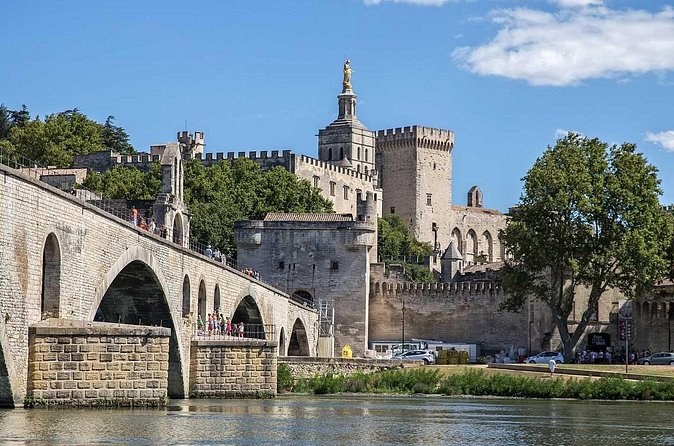
Avignon rewards a plan. The old town is small enough to cross on foot, but the palace, the bridge and the days out each want their own hours. These twelve cover a first visit, with what each costs, how long it takes and whether a guide helps. If you would rather be shown than find your own way, the Avignon guided tours start from the squares inside the walls.
Why is the papal palace the first thing to do?
Because it is the reason the city looks the way it does. The Palais des Papes is the largest Gothic palace, built in nearly twenty years by Benoît XII and Clément VI between 1335 and 1352, and it is on the UNESCO list with the bridge and the cathedral. Since 1 August 2026 a ticket costs €16, €13 reduced and €10 for ages 10 to 17. Children under 10 go free.
Allow about two hours. The Histopad tablet is free at the entrance, in seven languages. A new route opened on 1 May 2026 with rooms never shown before, and works continue to spring 2027. The palace opens every day, from 9 am to 7 pm between 1 March and 1 November, with last admission an hour before closing. If you want a person rather than a tablet, the walk with the palace ticket puts your entry in its $80 fare.
Is the old bridge worth €6?
On the combined ticket, yes. The Pont Saint-Bénézet costs €6 on its own, €4 for ages 10 to 17 and nothing under 10. With the palace it is €19.50, which adds only €3.50 to the palace price, and the ticket stays valid the next day. You get about 35 minutes on the bridge with a free audioguide in 11 languages, and a lift serves pushchairs.
On its own, €6 for a bridge that stops in the middle of the river is a matter of taste. You see the whole of it for free from the garden above.
Where is the best view of the river?
From the Rocher des Doms, the garden on the rock 30 m above the Rhône, beside the palace. It has reopened after its renovation and costs nothing. You look down on the bridge, across to the river island and out over the far bank. Go late in the day, when the heat has gone.
On the way up you pass Notre-Dame des Doms, the 12th-century cathedral, free to enter. Its gilded Virgin, 4.5 tonnes of lead, has stood on the belfry since 1859. From 1 October the cathedral closes on Mondays and over lunch.
When should you go to the covered market?
In the morning. Les Halles, on place Pie, has about 40 traders under one roof and opens from 6 am to 2 pm, Tuesday to Sunday, staying open to 3 pm from Friday to Sunday. It is closed on Mondays. Its outer wall is a planted garden by Patrick Blanc, worth seeing from the square.
You can shop for a picnic, or sit at a counter for lunch. The Avignon food tours start or pass here.
Which streets are worth an hour on foot?
Rue des Teinturiers, the old dyers' street, was listed in 1932. In 1817 it had 23 water wheels, and four still turn. It is the busiest street in the city in July, and calm the rest of the year. Then walk a stretch of the ramparts: 4.3 km of wall, begun in 1355 and finished in 1370, free to see.
A guide shows you the corners you would miss. The Avignon walking tours start at $29 a person, and the post-office walk makes twelve short stops in two hours.
Is a food walk worth the money?
If it replaces a meal, yes. The Taste Avignon walk serves the equivalent of a full meal in at least four stops, with wine for over-18s, for $98 a person. It leaves from the palace steps at lunch or in the evening, and needs two travellers on the booking.
The Essentials walk from Place de l'Horloge adds a wine-and-cheese pairing and a chef's light lunch or dinner, from $102. Guests with severe food allergies cannot take the Taste walk.
Should you spend a day in the wine country?
If you drink wine, give it a day. Châteauneuf-du-Pape lies about 20 km north of the city by the cycle routes, and it has been an appellation since 1936 and lists 18 grape varieties. Gigondas, under the Dentelles de Montmirail, became the first Côtes du Rhône Villages wine to be made a cru, in 1971.
The Avignon wine tours run from $91 to $126 for a half day to $203 for the seven-hour day from rue de Mons. Several are for adults only. The page on the wines of the Rhône crus explains what you will pour.
Which hilltop villages should you see?
Gordes, Roussillon, Ménerbes and Les Baux are all on the list of the Plus Beaux Villages de France. Roussillon's ochre trail takes 30 or 50 minutes, and it stains pale clothes, so wear dark. At Fontaine-de-Vaucluse the Sorgue rises at the foot of a cliff more than 200 m high, a 15 to 20 minute walk from the village.
The day tours from Avignon reach four villages in a half day and up to seven stops in a full one. The highlights day covers the most ground, from $150.
Is the Roman aqueduct worth the trip?
Yes, and it is easier than it looks. The Pont du Gard carries a Roman aqueduct of the 1st century across the Gardon, three storeys rising to nearly 48.77 m. It was part of a 50 km channel from a spring near Uzès to Nîmes. The site is pedestrian: walking onto it is free, and what you pay for is the parking, at €9 a car for the day, and the museum.
The Provence Panorama day and the ten-hour A la Française day list its entrance in the fare. The highlights day also ends there, after six other stops.
What is on in July?
The Festival d'Avignon, born in the palace courtyard in 1947 with Jean Vilar's Richard II. In 2026 it ran from 4 to 25 July, and the OFF festival alongside it reached its 60th edition. The city is at its fullest then, so book your bed early.
Dates for next July are not yet published. The page on the city's festivals lists the smaller ones through the year.
Can you cycle out to the river island?
Yes, and it is the easiest escape from the heat. The Île de la Barthelasse covers 700 hectares between the two arms of the Rhône, with orchards of pears, apples and peaches. A free shuttle boat crosses from Quai de la Ligne, below the garden, and the ViaRhôna cycle route runs across the island into the city.
Vélopop rents 300 electric bikes from 29 stations. For a longer ride, the Luberon e-bike day puts the bike and helmet in its $184 fare. See the page on outdoor activities for the routes.
What can you see for free?
More than you might think. The streets and squares inside the walls, the ramparts, the cathedral and the garden above the river cost nothing. So do the market and the shuttle boat. At the aqueduct you pay only to park.
The Petit Palais, begun in 1317 as the bishops' residence, now holds a museum of Italian painting of the Middle Ages. Check its prices and hours with the museum before you go.
Which of these need a ticket?
Only two doors inside the walls charge, and a tour covers the rest.
| What | Cost | Time | With a guide |
|---|---|---|---|
| The papal palace | €16, free under 10 | About 2 hours | One walk goes inside |
| The old bridge | €6, or €19.50 with the palace | About 35 minutes | Seen from outside on walks |
| The garden above the river | Free | 30 minutes | On the private walk |
| The covered market | Free to walk in | An hour | On the food walks |
| The dyers' street and the ramparts | Free | An hour | On the back-street walks |
| A food walk | $98 to $108 | 3 to 3.5 hours | Yes |
| A wine day | $91 to $126, or $203 for a full day | 4 to 7 hours | Yes |
| The hilltop villages | $92 to $196 | 5 to 10 hours | Yes |
| The Roman aqueduct | Free on foot; €9 to park | About an hour | On several full days |
| The river island | Free | Half a day | No |
What can you do in one day?
Be at the palace at 9 am and give it two hours. Walk the bridge on the combined ticket, then lunch at the market before it closes at 2 pm. Spend the afternoon in the back streets and climb to the garden for the evening light.
If you have longer, our plan for one to three days adds the villages and the wine country, and the guide to the quieter hours times each sight.
Frequently asked questions
What should I do first in Avignon?
What are the best Avignon tours?
What is free in Avignon?
Is the combined Palais and bridge ticket valid on two days?
What is the Avignon City Pass?
What can I skip on a short visit?
When is the Festival d'Avignon?
Tours that fit a first visit
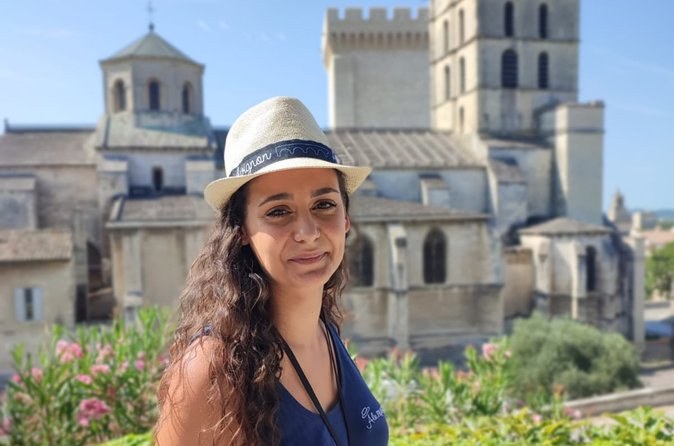
Avignon Walking Tour including Pope's Palace
Three and a half hours from 4 rue de la République with a licensed guide, the palace entrance ticket in the fare and a glass of Côtes du Rhône to finish.
From $80 per person
Check Availability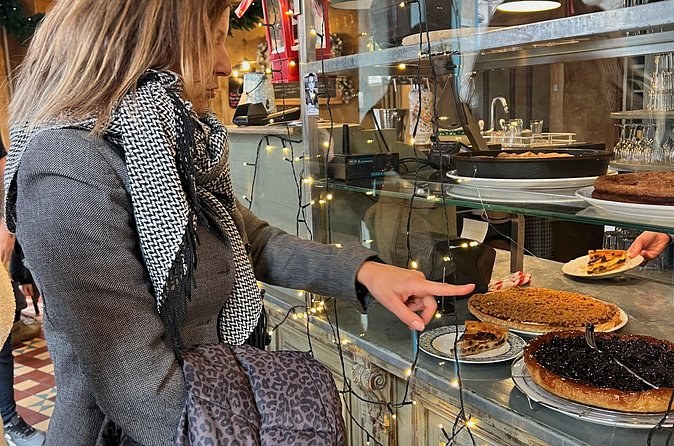
Taste Avignon – A Full French Culinary Tour by Do Eat Better
Three and a half hours from the palace steps at lunch or in the evening: the covered market, the old streets and the equivalent of a full meal, with wine for over-18s.
From $98 per person (minimum 2)
Check Availability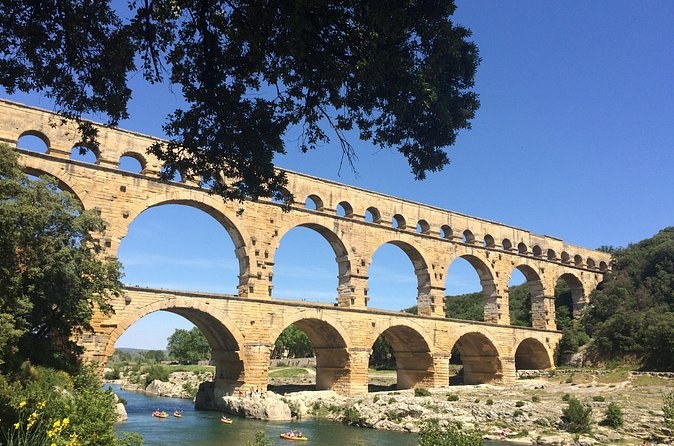
Provence Highlights Full-Day Tour from Avignon
Nine and a half hours from the tourist office at 9 am to seven stops, from a spring below a cliff to the Roman aqueduct. Bottled water in the fare; strollers fine.
From $150 per person
Check AvailabilityNext: Putting the days in order? The one-to-three-day plan does it morning by morning. Every fare sits side by side on Avignon Tours.